
Virbac Corporation
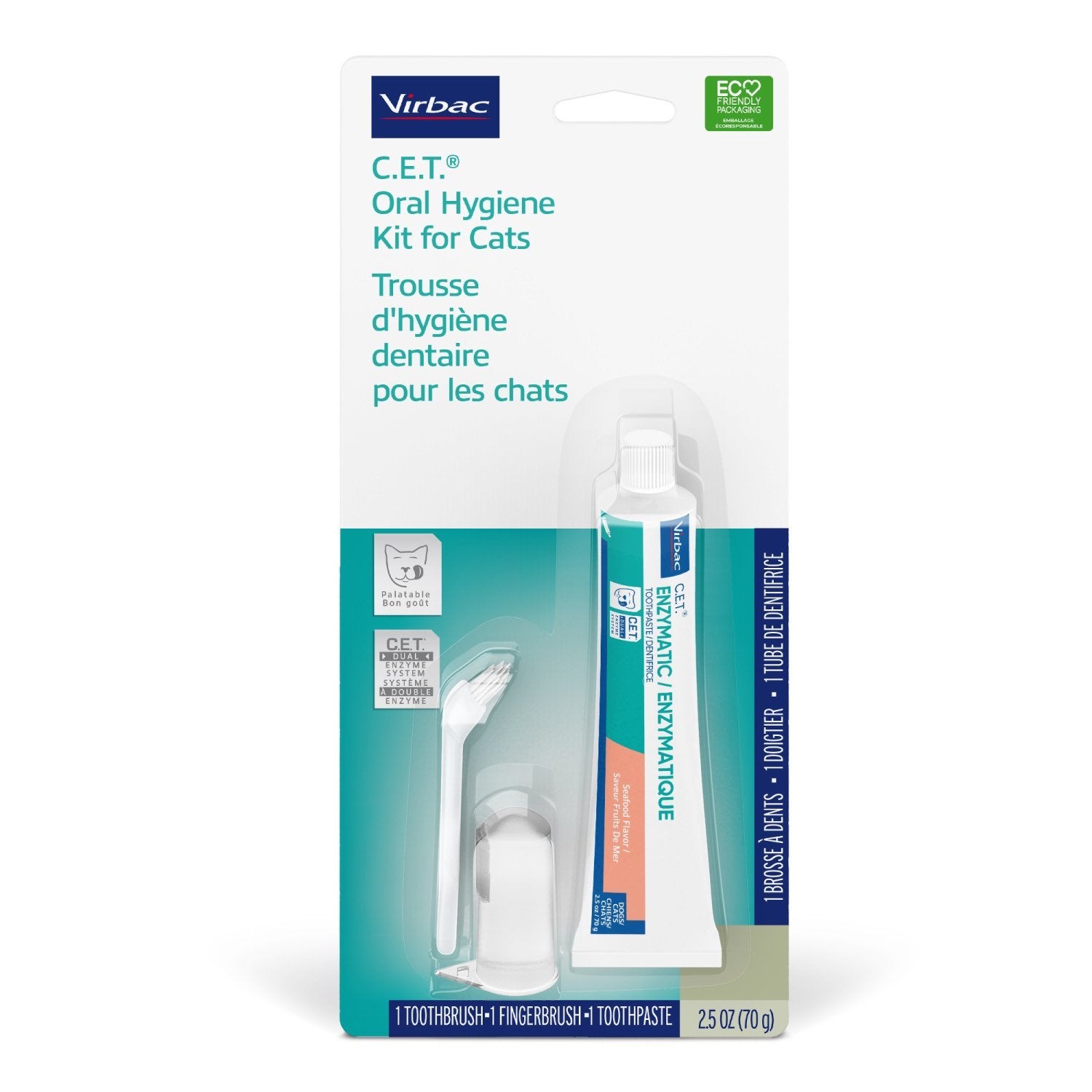
Virbac C.E.T oral hygiene kit for cats Seafood 1 kit
Most orders ship within 2-3 business days; delivery is typically 2-5 business days after that, depending on the shipping service selected at checkout. Estimated total: 4-8 business days.
Questions about your order? Email orleansrxinfo@gmail.com - that's the fastest way to reach us. The pharmacy phone line is reserved for prescription and in-store service.
Virbac C.E.T oral hygiene kit for cats Seafood 1 kit
2746 St Joseph Blvd
2746 St Joseph Blvd
100
Ottawa ON K1C 1G5
Canada
Choose options
Most orders ship within 2-3 business days; delivery is typically 2-5 business days after that, depending on the shipping service selected at checkout. Estimated total: 4-8 business days.
Questions about your order? Email orleansrxinfo@gmail.com - that's the fastest way to reach us. The pharmacy phone line is reserved for prescription and in-store service.
Virbac C.E.T. Oral Hygiene Kit for Cats, Seafood
Dental disease affects most adult cats, and cats are experts at hiding mouth pain. The Virbac C.E.T. Oral Hygiene Kit for Cats gives you what you need to start home brushing: a cat-sized toothbrush and seafood-flavoured C.E.T. enzymatic toothpaste. The toothpaste's dual-enzyme system supports saliva's natural antibacterial action against plaque, and it is safe to swallow, so no rinsing is needed.
What's in the Kit
- Toothbrush designed for cats
- C.E.T. enzymatic toothpaste, seafood flavour
Key Benefits
- Helps reduce plaque and tartar build-up
- Supports healthy gums and fresher breath
- Seafood flavour most cats like
- No rinsing; safe if swallowed
How to Brush Your Cat's Teeth
- For a few days, let your cat lick a little toothpaste from your finger as a treat
- Then gently rub the paste along the gums with your finger
- Introduce the brush, lifting the lip and brushing the outer surfaces in small circles along the gum line
- Start with a few teeth and a few seconds, and build up
- Aim for daily brushing
Pharmacist's Note
Patience pays off with cats: short, calm sessions at the same time each day, always ending with praise or a treat, work far better than long ones. Focus on the outside of the back teeth and the large canines. If your cat drools, paws at its mouth, drops food, chews on one side or has a red line along the gums, stop brushing and book a veterinary dental exam, as tooth resorption and gum disease are common and painful.
Frequently Asked Questions
How often should I brush?
Daily is ideal; build up from a few times a week.
When can I start?
Kittens can start getting used to it early; full brushing works best once adult teeth are in, around 6 months.